Belt It: Tangled Rope Puzzle
- 3.9
- Rating
- 5.00M
- Installs
- Free
- Price

 Analysis by App-foxy
I picked up Belt It expecting a quick puzzle distraction, and that is exactly where it works best. The game gives me a compact problem to solve, asks me to secure objects with belts, and turns a simple physical idea into a sequence of increasingly careful decisions. It is a free puzzle game from Sunday.gg, rated for Everyone, and it feels designed for short sessions rather than long, uninterrupted campaigns.
What makes it worth discussing is not a complicated story or a huge collection of modes. Its appeal comes from watching a small arrangement become manageable after I understand what the puzzle is asking. I can open it while waiting for a coffee, play a few stages during a commute, or use it as a low-pressure break between more demanding tasks. The central question is always practical: where should each belt go so the items stay secure?
How the first puzzles establish the goal
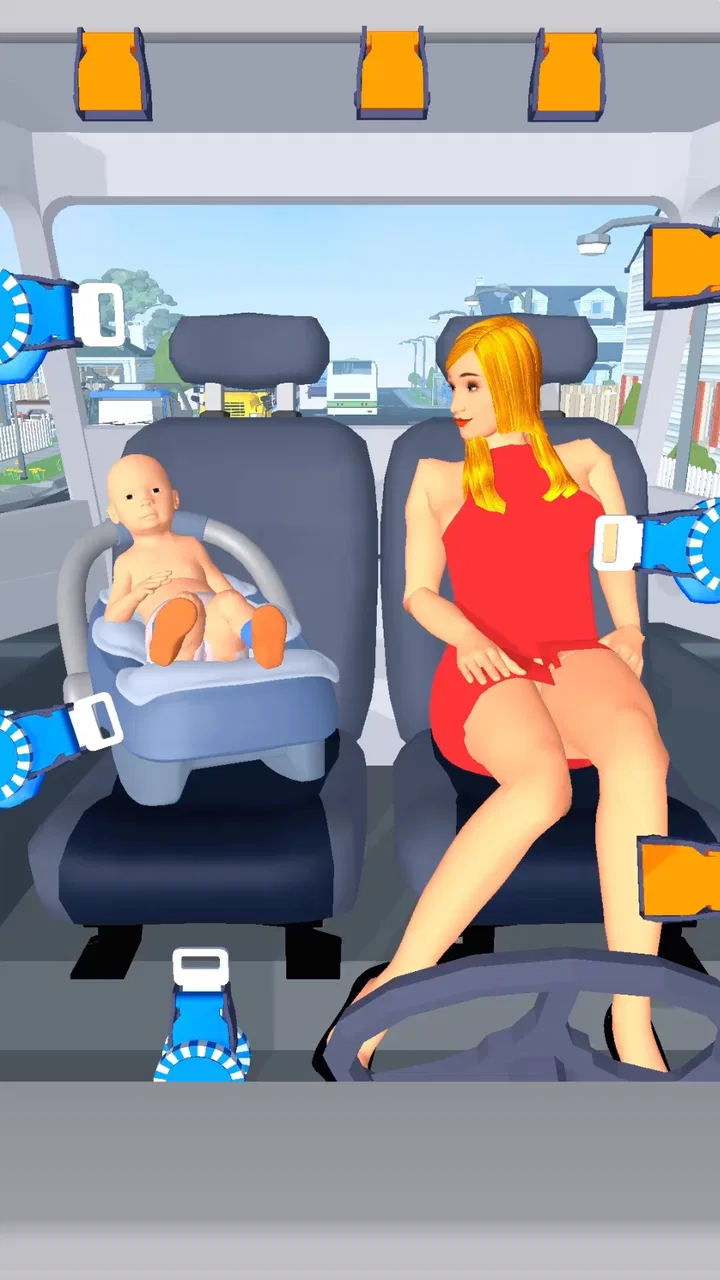
The early experience is easy to understand without a long explanation. I see items that need to be protected, then work out how belts can hold them in place. That immediate visual relationship is important because it lets me learn by doing. Instead of memorizing a complicated rule set, I begin by noticing which objects are exposed, which spaces are usable, and what may shift when I make a placement.
You May Also Like

 Blood Strike: 2.5 Anniversary
Blood Strike’s Loadouts Turn Every Drop Into a Tactical Gamble
A close look at Blood Strike’s custom loadouts: how fast access to signature weapons reshapes its battle royale rhythm, rewards preparation, and narrows the gap between fights.

 Pandora - Music & Podcasts
Pandora’s Music Is Easy to Start, but Harder to Recover
Pandora’s strength is its low-effort path from a seed to a station. Its weak spot is how much confidence it asks you to place in connection, setup, and quiet recovery.

 8 Ball Pool
 Is Built on Rivalries, Rematches, and Routine
A close look at the rivalries, rematches, shared routines, and unanswered safety questions that turn a quick pool match into a persistent mobile community.

 Samsung Music
’s Quiet Strength Is Playing What You Already Own
Its reach comes less from spectacle than from dependable access to a personal library. That simplicity is both the app’s strongest retention engine and its ceiling.

 AccuWeather: Weather Radar
AccuWeather Review: A Quick, Clear Forecast for Everyday Decisions
For everyday plans, the best forecast is the one you can understand quickly. AccuWeather makes rain timing, radar, and local conditions easy to act on, with a few trade-offs.

 Hill Climb Racing
Why Hill Climb Racing Still Turns Crashes Into One More Run
A tiny car, a bumpy hill and one more upgrade: Hill Climb Racing keeps resurfacing because its simple chaos makes every near-miss feel personal.
More From Our News Desk



That gives the opening stages a useful sense of purpose. I am not simply tapping until something happens; I am testing a solution. The first goals are modest, but they teach the habit that matters most: look at the entire arrangement before committing to a move. A belt that seems helpful for one item may create a problem for another, so even a straightforward level encourages a little planning.
I also like that the objective remains concrete. Many puzzle games bury their purpose under menus, currencies, or layered progression screens. Here, the physical task is the focus. When I finish a puzzle, I understand why it worked: the items are secured and the arrangement has held together. That clarity makes the game approachable for people who want a puzzle they can start immediately.
For a new player, my best advice is to resist the urge to place the first belt as soon as I see an obvious gap. I first scan the edges, identify the item most likely to cause trouble, and then consider how one belt might support more than one part of the layout. This small change in approach makes the game feel less like trial and error and more like a visual planning exercise.
Small wins matter more than spectacle
The satisfaction here comes from resolution rather than presentation. A successful arrangement gives me a clear sense that the puzzle has been stabilized. That is enough to make the next stage tempting, especially because the commitment required is small. I do not need to reserve a full evening to make progress; a couple of completed challenges can feel worthwhile on their own.
This structure suits players who enjoy tidy, self-contained tasks. If you like sorting, arranging, and spotting the safest connection in a crowded space, the basic idea should feel natural. If you prefer puzzles built around wordplay, narrative clues, or elaborate logic grids, the belt-focused interaction may seem narrower than what you normally play.
The game’s category is puzzle, but it is not trying to imitate a traditional Sudoku or crossword. Its challenge is spatial and practical. I am judging position, coverage, and consequences rather than calculating a long chain of numbers. That difference is useful when choosing it over more familiar alternatives: Belt It is better for visual problem solving in short bursts, while a conventional logic game may offer deeper abstract deduction.
Progress signals and the feeling of moving forward
Progress in a game like this depends heavily on how clearly each completed puzzle leads into the next one. Belt It communicates advancement through the act of solving successive arrangements. I can feel myself improving when I stop reacting to individual objects and start reading the whole board as a system. That improvement is subtle, but it is more meaningful than simply tapping through easy stages.
The strongest progress signal is a change in my own behavior. At first, I focus on the most visible item. Later, I naturally think about order: which placement should happen first, which area needs protection, and whether a seemingly secure item could still be affected by another action. The game does not need a complicated skill tree to show growth when the puzzle itself exposes better habits.
There is also a useful distinction between finishing a stage and understanding it. I may discover a workable arrangement by experimenting, but the better result comes when I can explain why the belts hold everything securely. That makes replaying a recently solved puzzle worthwhile for a moment, not because I expect a completely different game, but because I can check whether my first solution was deliberate or lucky.
Players wondering whether the game offers a strong long-term progression should set their expectations sensibly. The attraction is the stream of individual puzzles and the gradual demand for more careful placement, not a character-building system or a story campaign. If visible unlocks, collectible rewards, or a large narrative arc are essential to your enjoyment, this may feel light. If solving itself is the reward, the structure is more convincing.
Why the simple format can still hold attention
I found the game most effective when I treated each level as a short mental reset. The compact objective makes it easy to begin, while the need to inspect the arrangement prevents the experience from becoming completely automatic. Even when the basic interaction stays familiar, a new layout can make me pause and reconsider my usual first move.
That said, the same simplicity can become a limitation. Players who need a strong sense of collection, customization, or a continuously changing rule set may eventually feel that the core loop is too focused. Belt It succeeds by keeping attention on securing the items; it does not need to be everything at once, but that also means its audience is specific.
Difficulty curve: from obvious placements to careful sequencing
The difficulty works best when I stop measuring it by how many actions a puzzle requires. A small board can be more demanding than a busy one if the safe placement is easy to miss. The challenge comes from recognizing relationships between objects and belts, then avoiding a solution that protects one area while leaving another vulnerable.
In the easier moments, the correct move is usually visible after a brief inspection. That creates a comfortable entry point for younger players and for anyone who does not normally choose puzzle games. The Everyone age rating also fits that approachable tone. I can hand the game to someone who wants a gentle challenge without first explaining complicated controls or mature themes.
As the layouts become less immediately readable, patience becomes more valuable than speed. I get better results by pausing before each placement and imagining the completed arrangement. This is one of the game’s less obvious strengths: it rewards a slower eye. A player who normally rushes through casual games may discover that taking a few seconds to inspect the whole puzzle is more effective than repeatedly undoing a careless choice.
One practical technique is to identify the item with the fewest safe options. I deal with that constraint first, then use the remaining space for easier placements. Another is to avoid treating the center of the layout as automatically important; sometimes the awkward edge or exposed corner determines whether the entire solution works. These habits are more useful than memorizing a preferred pattern because each arrangement asks for a fresh reading.
Where the challenge may feel uneven
The pacing is not equally compelling for everyone. When a puzzle clicks immediately, I can clear it with a pleasant sense of momentum. When the layout requires repeated attempts, the same simplicity can make failure feel less exciting than in a richer strategy game. There is no dramatic narrative consequence to a mistake, so the motivation has to come from wanting to understand the arrangement.
That makes the game a poor match for players who want constant pressure or a competitive timer. I would choose a faster arcade puzzle for score chasing, and a deeper strategy title for multi-step planning across a larger map. Belt It occupies the calmer middle ground: more interactive than a passive brain teaser, but less demanding than a full strategic campaign.
For me, the best way to handle a stubborn stage is to change the question. Instead of asking, “Where can I put this belt?” I ask, “Which item must remain safe when everything else is placed?” That reframing often reveals the constraint I missed. It also prevents random tapping, which is the quickest way to make a short puzzle session feel irritating.
Retention pressure without turning every session into a commitment
The game’s retention comes from the familiar pull of one more solved puzzle. Because the individual objective is compact, I can imagine stopping after a single stage, yet the next arrangement is close enough to invite another attempt. That is a sensible design for mobile play. It respects short attention windows while still offering a reason to continue.
Its free price lowers the barrier to trying it, and optional in-app purchases are listed at $2.99 per item. I would approach those purchases as a personal choice rather than part of the reason to begin. The core appeal is the puzzle interaction itself, so I would first spend time deciding whether I enjoy the layouts and pacing before considering any optional item.
The game has reached over five million installs and holds a four-point average from around twenty thousand ratings, which suggests that its straightforward format has found a broad audience. I would not take that as proof that everyone will enjoy it; the numbers mainly reinforce what the design communicates. This is an accessible, widely tried casual puzzle rather than an obscure experiment aimed only at dedicated puzzle specialists.
It is also worth knowing what kind of retention the game does not provide. I would not choose it because I want a social community, a competitive ladder, or a long story to follow. The reason to return is more immediate: there is another arrangement to inspect and another small problem to settle. That can be satisfying, but it may not be enough for someone who needs external goals beyond the board.
A realistic everyday use case
Imagine I have ten minutes before an appointment. I can open Belt It, solve one or two stages, and put the phone away without losing the thread of a complicated campaign. If one puzzle catches me, I can spend the remaining time examining the layout rather than feeling forced to rush. That makes it more suitable for waiting rooms and short breaks than games that require a long run or punish sudden interruptions.
On the other hand, if I am already tired and want something completely mindless, this may not be the right choice. The interaction looks simple, but it still asks me to pay attention. After a demanding day, I might prefer a passive video or a puzzle with automatic matching. Belt It is relaxing when I want light concentration, not when I want my brain switched off.
For families, the Everyone rating and clear objective make it approachable, but I would still expect younger players to benefit from guidance on looking ahead. The game can teach useful spatial habits without feeling like a lesson, especially if an adult talks through why one belt placement is safer than another. That shared problem solving is a stronger use case than simply handing over the phone and expecting endless independent play.
Practical fit, device support, and alternatives
The game supports devices running Android seven or later, and its current version is 188. That makes it accessible to many older Android phones as well as newer models. I would still judge the experience on the specific device in hand, particularly if the screen is small; visual placement puzzles benefit from enough room to distinguish items and belt positions comfortably.
Sunday.gg keeps the identity of the game closely tied to its central action. I appreciate that focus because there is less temptation to confuse the objective with a broader collection of unrelated activities. The trade-off is that the experience can feel limited if I am looking for variety inside one app. A larger puzzle compilation may offer more formats, while this game gives one idea more room to develop.
Compared with match-three games, Belt It asks for planning rather than rapid pattern recognition. Compared with physics puzzles, it gives me a more controlled arrangement problem instead of relying mainly on unpredictable motion. Compared with classic logic apps, it feels more tactile and visual, but usually less abstract. Those distinctions help me decide when to open it: I choose it when I want to organize a space and protect objects, not when I want a score chase or a long deduction chain.
The game is free to download, which makes testing that fit easy. I would recommend trying it during a short session rather than judging it from the first few taps. The important question is whether the act of examining a layout and refining a belt arrangement feels satisfying to you. If it does, the uncomplicated presentation becomes an advantage. If it does not, extra progression would probably not solve the underlying mismatch.
My progression verdict
After spending time with Belt It, I see a game with a clear early goal, readable progress, and a difficulty curve built around observation rather than complexity for its own sake. Its strongest moments arrive when a puzzle initially looks messy, then becomes understandable after I identify the vulnerable item and plan the order of my placements.
The pacing is well suited to short mobile sessions. I can stop after a solution without feeling that I abandoned a major quest, yet the next challenge remains tempting when I have more time. That balance is a real strength for casual play. The limitation is equally clear: players who need deep unlock systems, social competition, dramatic stakes, or many different puzzle types may outgrow it.
I would recommend it to someone who enjoys visual organization, gentle spatial reasoning, and compact challenges that can fit around everyday life. I would skip it for a friend who wants a high-speed arcade experience or a full strategy game with layers of long-term planning. For the right player, the restraint is the point. Belt It takes one simple idea and makes the satisfaction come from getting the arrangement right.
My final judgment is positive, with one condition: approach it as a focused casual puzzle, not as an all-purpose mobile game. Its free entry, Everyone rating, and approachable objective make it easy to try, while its best challenge comes from slowing down and thinking before acting. The real reward is not merely finishing a stage, but learning to see the safe solution before the belts are even in place.
FAQs for Belt It: Tangled Rope Puzzle
01What is the main objective of Belt It?
Belt It is a puzzle-based game where the main objective is to strategically place belts to transport items from one point to another. Players must think critically to solve levels, requiring both timing and precision to ensure that items are moved correctly without falling or getting stuck.
02Is Belt It suitable for all age groups?
Yes, Belt It is designed to be family-friendly and suitable for all age groups. The game offers varying levels of difficulty, ensuring that both younger players and adults can enjoy the challenge. Its intuitive controls and engaging puzzles make it accessible to everyone.
03Does Belt It require an internet connection to play?
Belt It can be played offline, making it an excellent choice for users who want to enjoy the game without needing a constant internet connection. However, some features, such as leaderboards or in-app purchases, may require connectivity.
04Are there in-app purchases in Belt It?
Yes, Belt It includes in-app purchases that allow players to unlock additional features, levels, or hints. While the base game is free, these optional purchases enhance the gameplay experience and are not necessary to complete the game.
05How frequently are new levels or updates added to Belt It?
The developers of Belt It regularly update the game with new levels and features to keep the experience fresh and engaging. Players can expect periodic updates that introduce new challenges and improvements based on user feedback.
Pros
- Intuitive and user-friendly interface.
- Engaging puzzles with increasing difficulty.
- Vibrant graphics that enhance gameplay.
- Regular updates with new content.
- No intrusive ads during gameplay.
Cons
- Limited free levels without purchase.
- Can be repetitive after extended play.
- Requires internet for certain features.
- Occasional minor bugs and glitches.
- In-app purchases can be pricey.

Belt It: Tangled Rope Puzzle
Gallery